

Learn how to identify an outdated business plan early with 7 urgent signs, a review checklist, and practical fixes for small business owners.
Why an Outdated Business Plan Can Quietly Hurt a Small Business
Most small business owners do not wake up one morning and decide to ignore their plan. It happens slowly. The business gets busy. Costs creep up. A service changes.
A new offer gets added. The team grows. Then one day, the business plan still says one thing, but the business itself is doing something completely different.
That disconnect causes trouble.
If you need to go back to basics before reviewing what changed, this guide on how to write a small business plan can help you see what a working plan should include from the start.
A stale plan can lead to poor hiring timing, weak pricing decisions, fuzzy priorities, and strategic drift. I have seen owners hang onto an old plan because it once helped them get started, only to realize later it no longer matched their operational reality.
If you are wondering how to identify an outdated business plan, the answer is not to stare harder at the document. It is to compare the plan to what is actually happening in the business right now.
How to Identify an Outdated Business Plan Before It Slows Growth
The easiest way to spot trouble is to ask a blunt question: does your plan still help you make decisions today?
A business plan should not just explain where you wanted to go when you first wrote it. It should still help you answer practical questions now, like:
- Can I afford to hire?
- Are my margins still healthy?
- Is this the right time to expand?
- Are my services still aligned with market demand?
If the document sits untouched while your business evolves around it, that is your first warning. Knowing how to identify an outdated business plan comes down to checking whether the plan still reflects your numbers, your market, your team, and your growth goals.
What Is the Importance of a Current Business Plan for Small Business Owners?
The importance of a current business plan is simple: it helps owners make better decisions with less guesswork.
A current plan can:
- keep goals realistic
- support pricing and capacity decisions
- align the team around priorities
- reduce reactive decision-making
- highlight risks before they become expensive
If you are not sure whether your document still covers the right sections, reviewing the essentials of a business plan is a smart place to start.
Government of Canada business-planning resources and Canadian small business guidance both treat the business plan as a working document rather than a one-time exercise.
Canada.ca points owners to templates and planning resources, while CFIB explicitly describes a business plan as a living document that should guide the business over time.
If you have ever asked yourself why write my business plan in the first place, the answer becomes much clearer once you see how many daily decisions it should be supporting.
| Benefit of a current plan | Why it matters |
|---|---|
| Better decision-making | Helps you judge opportunities with more clarity |
| Stronger financial control | Keeps revenue, costs, and margins realistic |
| Team alignment | Gives staff and managers a common direction |
| Easier growth planning | Connects expansion to real capacity |
| Lower risk | Exposes weak assumptions before they get costly |
7 Urgent Signs Your Business Plan No Longer Fits Reality
Your Revenue Forecast No Longer Matches Real Sales
This is one of the clearest clues. If the plan says one thing and your sales reports say another, your assumptions are stale.
Maybe you projected faster growth than the market delivered. Maybe one service sells far better than expected while another barely moves.
Either way, once the numbers drift too far, the plan stops being useful. This is one of the fastest ways how to identify an outdated business plan becomes obvious.
Your Costs, Pricing, or Margins Are Out of Date
A lot of owners review revenue but forget to revisit costs. That is where trouble sneaks in. Supplier increases, wage changes, software fees, rent adjustments, and delivery costs can quietly eat away at profit.
One owner I worked with had not updated service pricing in over two years because “the old rates were in the plan.” The problem was that labour and admin time had changed significantly.
The plan still looked polished, but the margins were getting thinner every month. That is not a pricing problem alone. That is a planning problem.
Your Team Has No Clear Connection to the Plan
If your team does not know the business priorities, the plan is not doing much. A good plan should shape what the team focuses on, how work gets done, and where the business is heading.
This does not mean every employee needs to read every page. It does mean the key priorities and business goals should show up in daily operations. If they do not, the plan is disconnected from execution.
Your Business Goals Have Changed, but the Plan Has Not
This is why knowing how to reassess business goals becomes important. Maybe you started out chasing growth, but now profitability matters more. Maybe you planned to add staff, but now you want tighter systems first. Maybe your target customer shifted.
If your goals changed but the plan still reflects last year’s thinking, you are using an outdated map.
If your direction has shifted, reviewing how to set objectives for your small business can help you rebuild that section with more clarity.
You Are Not Using the Plan in Decision-Making
This is the huge one. Many owners have a plan but do not know how to use it when real decisions show up.
If you are making calls about:
- expansion
- pricing
- hiring
- service changes
- capital spending
without referring back to your plan, then the document is not functioning as a management tool. Learning how to identify an outdated business plan often starts with admitting this truth.
Your Market, Customers, or Competitors Have Shifted
Markets move. Customer needs change. Competitors reposition. If your plan still assumes the same conditions as 12 to 24 months ago, it may already be behind.
Even a strong plan needs updating when:
- customer demand changes
- competition increases
- delivery times shift
- buying behaviour changes
You Have No Regular Review Process in Place
No review rhythm usually means no update happens until there is a problem. That is backwards. A simple annual review can catch drift before it turns into confusion.
If you have no scheduled business plan review, that alone is a warning sign.
How to Assess Your Business Plan’s Effectiveness in Day-to-Day Operations
If you want to know how to assess your business plan’s effectiveness, look at whether it helps your business function better in real life.
Ask:
- Does the plan still reflect today’s revenue mix?
- Does it support current staffing decisions?
- Does it help prioritize work?
- Does it match actual delivery capacity?
- Does it support performance measurement?
If the answer is mostly no, the plan may still exist, but it is not effective.
Business Plan Evaluation Checklist: What to Review First
A business plan evaluation checklist helps owners avoid getting lost in the document. Start with these areas first:
| Section to review | Key question |
|---|---|
| Revenue forecast | Does this still match real sales patterns? |
| Pricing and margins | Are prices still profitable after cost increases? |
| Goals and milestones | Are these still realistic and relevant? |
| Target market | Are these still the right customers? |
| Operations | Can the business actually deliver at this level? |
| Staffing | Does the team structure still make sense? |
This checklist is often the fastest way to begin how to identify an outdated business plan without rewriting everything.
And if your review uncovers deeper issues in pricing, operations, or priorities, a structured business health check can help you see what is really driving the problem.
How to Reassess Business Goals Without Starting From Scratch
The good news is you usually do not need a total rewrite. To reassess business goals, start by separating what is still true from what clearly changed.
Using SMART criteria to set objectives can also make the updated version of your plan much easier to apply in real decision-making.
Review:
- what is working
- what no longer fits
- what has become unrealistic
- what new priorities emerged
A practical update beats a dramatic rewrite every time. The goal is not to make the plan longer. It is to make it more useful.
That is where strategic planning for small business becomes so helpful, because it forces you to reconnect your goals, capacity, and next steps in a practical way.
How to Realign Your Business Plan With Current Operations
To realign your business plan, compare the document against how the business actually runs now.
Look at:
- workflow
- capacity
- staffing
- pricing
- delivery standards
- decision-making habits
This is where many owners discover that the real issue is not the plan alone. It is the gap between strategy and operations. That is also why updating a plan often improves operational clarity.
Best Practices for Small Business Plans That Stay Useful Over Time
The best best practices for small business plans are not fancy. They are consistent.
Keep the plan useful by:
- reviewing it at least once a year
- updating major assumptions after significant changes
- tying it to actual numbers
- using it in decision-making
- keeping priorities visible to the team
Canadian government and small business resources both emphasize planning as an ongoing process, not a one-time event.
Helpful Tools and Resources for Reviewing a Business Plan
If you are trying to figure out how to identify an outdated business plan and update it properly, these helpful tools can help:
- your latest financial statements
- last 12 months of sales reports
- a one-page summary of current goals
- a business plan checklist
- a simple cash flow forecast
Printers That Small Businesses Find Helpful
Modern SMB printers should:
- reduce manual document handling
- improve workflow consistency
- support multi-step processes (scan → send → store)
For owners printing plans, checklists, and review sheets, these printers are well rated on Amazon.ca.
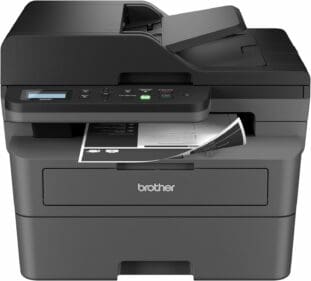
Brother DCP-L2640DW Monochrome Multifunction Laser Reliable, high-speed printer for document-heavy workflows
✔ Pros: Fast, durable
✖ Cons: Higher upfront cost

Brother HL-L8360CDW Business Color Laser Printer Great for consistent, high-volume output
✔ Pros: Excellent print quality
✖ Cons: Larger footprint
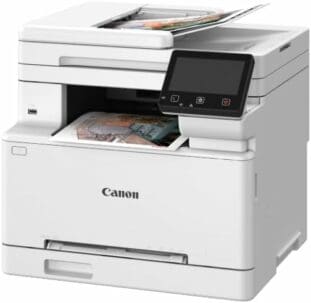
Canon imageCLASS MF445dw Business Printer
All-in-one solution for small offices
✔ Pros: Multi-function capability
✖ Cons: Learning curve

Epson RapidReceipt RR-600W – Wireless Color 2-Sided Receipt and Document Scanner . .. .. ✔ Pros: Receipt & Invoice Management
✖ Cons: Learning curve
FAQs
How often should a business plan be reviewed?
At minimum, once a year. Review it sooner if pricing, staffing, market demand, or growth goals change significantly.
What are the signs your business plan is outdated?
Common signs include outdated sales forecasts, old pricing, unclear team alignment, unused goals, and no regular review process.
Can I update a business plan without rewriting the whole thing?
Yes. Most owners can review the main assumptions, update key sections, and realign goals without starting over.
Why is a current business plan important?
A current plan supports better decisions, clearer priorities, stronger financial control, and more realistic growth planning.
How do I know if my business plan is still effective?
Check whether it still reflects actual numbers, market conditions, staffing, operations, and the decisions you are making today.
Conclusion
Knowing how to identify an outdated business plan early can save a business from expensive drift. The biggest danger is not having a bad-looking document. It is having a polished one that no longer matches reality.
If your pricing changed, your team grew, your market shifted, or your goals evolved, your plan may need more than a quick glance. It may need a structured review.
Action Step
If your business plan no longer reflects how your business actually runs, it may be time for a proper review. Start with your current numbers, compare them against the plan, and update the areas that no longer fit.
And if you are not sure what to fix first, that is usually a sign the business needs outside structure — not more guesswork. A focused review can help you reconnect strategy, operations, and growth priorities before the gap gets more expensive. Contact Us Today:
References
- Government of Canada: Planning a Business / Business Plan Resources https://sbs-spe.feddevontario.canada.ca/business-plan-guide
- CFIB — How to write a business plan https://www.cfib-fcei.ca/en/tools-resources/how-write-business-plan


