

Discover common inefficiencies in business and learn how to identify bottlenecks, reduce wasted effort, and improve workflow efficiency.
Most small business owners don’t realize they have inefficiencies — they just feel them.
Work takes longer than it should. Staff are busy all day but key priorities still lag. Customers follow up more than expected. And somehow, despite the effort, progress feels slow.
I once worked with a trades business owner who said, “We’re slammed — but I don’t know why we’re not making more money.” That statement alone told me everything.
The issue wasn’t workload. It was hidden inefficiencies.
Understanding common inefficiencies in business is the first step toward fixing them. Because until you can see where time, effort, and resources are being lost, you can’t improve them.
Understanding common inefficiencies in business is often the turning point for small business owners who feel stuck despite working harder than ever.
Once you begin to recognize these patterns, the next logical step is learning how to improve business processes so your team can work more efficiently without increasing workload
What Are the Common Process Inefficiencies in Business?
Common process inefficiencies are the small breakdowns in how work gets done — often unnoticed, but constantly draining time and energy.
They show up as:
- repeated work
- unclear communication
- delays between steps
- inconsistent execution
These inefficiencies weaken operational efficiency and reduce workflow reliability, even in businesses that appear busy and productive.
The key problem? Most of them are invisible until you actively look for them.
These small breakdowns may seem minor on their own, but collectively they represent some of the most common inefficiencies in business that limit growth and profitability.
Common Inefficiencies in Business: Where They Actually Come From
Most inefficiencies don’t come from a lack of effort — they come from how work is structured (or not structured). What makes them dangerous is that they often feel “normal” because they’ve been happening for so long.
Here are the most common hidden process problems — and what they actually look like in real businesses.
1. Poor Communication and Information Gaps
This is one of the most common — and most underestimated — inefficiencies.
When information lives in emails, texts, notebooks, or people’s heads, things get missed. Staff spend time chasing updates instead of doing the work.
Real scenario:
A small contracting business had project details scattered across emails, WhatsApp messages, and handwritten notes. One team showed up to a job site without the latest instructions, while another duplicated work already completed. The result? Lost time, frustrated staff, and an unhappy customer.
This kind of breakdown weakens information flow and creates constant rework — even though everyone feels “busy.”
2. Manual Work and Repeated Tasks
If your team is doing the same task over and over manually, inefficiency is guaranteed.
It might not seem like a big deal at first — a few minutes here and there — but over time, it adds up significantly.
Real scenario:
An office administrator was manually entering the same customer information into three different systems they owned — scheduling, invoicing, and CRM. Each entry only took a few minutes, but across dozens of clients per week, it became hours of repetitive work.
This reduces productivity efficiency and increases the likelihood of errors, especially as workload increases.
3. Lack of Clear Ownership
When everyone is responsible, no one is responsible.
Tasks get delayed, dropped, or completed inconsistently because ownership isn’t clearly defined.
Real scenario:
A small service company kept missing follow-ups with customers. When asked who was responsible, the answer was always, “We all kind of handle that.” In reality, it meant no one consistently did.
Once a single person was assigned ownership, follow-ups improved almost immediately.
Clear ownership strengthens accountability systems and prevents tasks from falling through the cracks.
4. Disconnected Tools and Systems
Many businesses adopt tools hoping to improve efficiency — but when those tools don’t work together, they often create more work.
Instead of simplifying operations, they force staff to jump between systems, duplicate data, and manually connect information.
Real scenario:
A retail business used separate tools for inventory, sales, and accounting — none of which were integrated. Staff had to manually reconcile numbers at the end of each day, often finding discrepancies that took hours to resolve.
This reduces process visibility and creates hidden inefficiencies that grow as the business scales.
5. Poorly Defined Processes
If there’s no clear “right way” to do something, everyone creates their own version.
At first, this feels flexible. Over time, it creates inconsistency, confusion, and inefficiency.
Real scenario:
A growing business noticed that each employee handled customer onboarding differently. Some skipped steps, others added extra ones. The result? Inconsistent customer experiences and delays in getting new clients fully set up.
Defined processes improve process standardization and make training, scaling, and quality control much easier.
6. Constant Interruptions and Task Switching
This is the inefficiency most business owners overlook — because it feels unavoidable.
But frequent interruptions destroy focus and slow everything down.
Real scenario:
An owner-manager was constantly interrupted with questions, calls, and quick decisions. By the end of the day, they felt exhausted — yet hadn’t completed any of their planned work. Important tasks kept getting pushed forward.
This reduces workflow efficiency and increases the time required to complete even simple tasks.
🔍 Why This Matters More Than Most People Realize
What’s important to understand is this:
👉 These inefficiencies rarely exist in isolation.
They stack up.
Poor communication leads to duplication.
Duplication leads to delays.
Delays create bottlenecks.
Bottlenecks increase stress and mistakes.
Before long, the business feels harder to run — even if revenue hasn’t changed.
The good news?
Once you can clearly see these inefficiencies, you can start fixing them — often with simpler changes than expected.
Identifying Bottlenecks in Business Processes
One of the fastest ways to uncover inefficiencies is by identifying bottlenecks in business processes.
In many cases, these bottlenecks are directly linked to common inefficiencies in business that have gone unnoticed for months or even years.
A bottleneck is simply the point where work slows down.
It could be:
- approvals waiting too long
- one person overloaded
- missing information delaying the next step
In one case, a business discovered that 70% of delays came from one approval step. Fixing that single point improved turnaround time across the entire operation.
Spotting bottlenecks improves process flow and highlights areas of operational friction.
IF you want to identify the real bottleneck in your business and not just the symptoms, get clarity in under 10 minutes :
No scoring. No long assessment. Just clarity.
Steps to Find Inefficiencies in Business Processes
You don’t need complex tools to start — just structure.
Here’s a simple framework:
| Step | What to Look For | Outcome |
|---|---|---|
| Map the process | Where work starts and ends | Clarity |
| Track delays | Where work pauses | Bottlenecks |
| Identify duplication | Repeated effort | Time savings |
| Gather feedback | Team frustrations | Hidden issues |
Following these steps strengthens workflow analysis and improves decision clarity when prioritizing fixes.
These insights are also valuable when revisiting how to write the operations section of a business plan so that documented processes reflect how work actually happens.
Once improvements are made, it becomes equally important to evaluate process optimization outcomes to confirm that changes are delivering measurable results.
What Tools Can Help Identify Inefficiencies in Business
You don’t need enterprise systems — just visibility. Tools help you see what’s happening. However, adopting tools without a clear plan often leads to digital transformation mistakes for small businesses that create more complexity instead of solving problems.
As visibility improves, many owners naturally begin exploring how to implement digital transformation in small business environments to streamline workflows further.
Simple Visibility Tools
- task boards
- shared documents
- workflow trackers
These improve process visibility and highlight inefficiencies quickly.
Process Mapping and Tracking Tools
These help you visualize workflows and identify gaps.
Used properly, they strengthen workflow mapping and reduce blind spots in operations.
Where to Start When Tackling Process Inefficiencies
Trying to fix everything at once is one of the biggest mistakes.
Instead:
- start with one bottleneck
- focus on high-impact issues
- fix what affects customers first
This approach improves operational focus and prevents overwhelm.
At this stage, many business owners begin to question whether they need process improvement or optimization first, especially when inefficiencies are deeply embedded.
Next Steps After Identifying Process Inefficiencies
Once inefficiencies are identified, resist the urge to fix everything immediately.
Start small.
Prioritize:
- high-impact issues
- quick wins
- repeat problems
This creates momentum while strengthening continuous improvement and building confidence across your team.
Taking the right next steps after implementing process improvements is what ensures these fixes actually stick and continue delivering results over time.
A Practical Example: How Small Businesses Fix Inefficiencies
A small service company struggled with missed appointments and delayed invoicing.
After mapping their workflow, they discovered:
- scheduling wasn’t centralized
- follow-ups were inconsistent
- invoicing depended on memory
By fixing just those three issues, they reduced delays and improved cash flow — without adding complex systems.
Small changes created significant improvements in business efficiency and process reliability.
Tools That Help Reduce Inefficiencies in Daily Operations
Modern SMB printers should:
- reduce manual document handling
- improve workflow consistency
- support multi-step processes (scan → send → store)
This is because:
👉 inefficient tools = inefficient processes
Even something as simple as a printer can either:
- remove friction, or
- quietly create inefficiencies
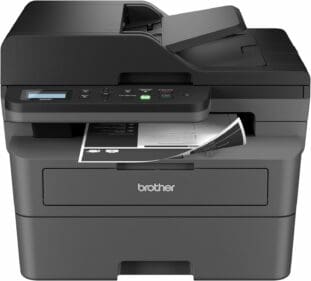
Brother DCP-L2640DW Monochrome Multifunction Laser Reliable, high-speed printer for document-heavy workflows
✔ Pros: Fast, durable
✖ Cons: Higher upfront cost

Brother HL-L8360CDW Business Color Laser Printer Great for consistent, high-volume output
✔ Pros: Excellent print quality
✖ Cons: Larger footprint
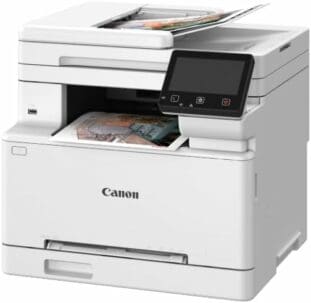
Canon imageCLASS MF445dw Business Printer
All-in-one solution for small offices
✔ Pros: Multi-function capability
✖ Cons: Learning curve

Epson RapidReceipt RR-600W – Wireless Color 2-Sided Receipt and Document Scanner ….. ✔ Pros: Receipt & Invoice Management
✖ Cons: Learning curve
Action Step — Fix the Bottlenecks That Are Slowing You Down
If you’re working harder but not seeing results, there’s a good chance inefficiencies are quietly holding your business back.
At BCINC, we help small businesses identify bottlenecks, simplify workflows, and build systems that actually support growth — not slow it down.
BCINC also offers a structured business process review to help identify inefficiencies and build practical systems that support growth.
Conclusion
Common inefficiencies in business are rarely obvious at first — but once identified, they become one of the easiest areas to improve. Inefficiencies are normal — but ignoring them is costly.
The goal isn’t perfection. It’s visibility.
When you understand where your business is losing time and energy, you can start making small, focused improvements that lead to real results.
FAQs for What are the Common Process Inefficiencies in Business
What are common inefficiencies in business?
They include poor communication, repeated tasks, unclear processes, and bottlenecks that slow work down.
How do I identify inefficiencies in my business?
Start by mapping workflows, tracking delays, and gathering feedback from your team.
What causes inefficiencies in small businesses?
Lack of structure, poor communication, and disconnected systems are the most common causes.
Where should I start fixing inefficiencies?
Focus on the biggest bottleneck or the issue that impacts customers the most.
References
Activ Trak – What is Operational Efficiency? Definition, Benefits, and Strategies Companies Can Use to Improve it. https://www.activtrak.com/operational-efficiency/
Kaizen – Operational Excellence: a comprehensive guide towards organizational improvement. https://kaizen.com/insights/operational-excellence-organizational-improvement/
Harvard Business Review — Operations Strategy https://hbr.org/topic/subject/operations-strategy
IBM (2024) What is Operational Efficiency? https://www.ibm.com/think/topics/operational-efficiency


