

Document management framework explained for small businesses. Learn how to improve efficiency, ensure compliance, and create a structured document system.
Most businesses don’t struggle because they lack documents.
They struggle because they have too many disconnected documents, outdated versions, and no clear ownership.
That’s where a document management framework becomes essential.
It creates structure around how documents are created, stored, accessed, reviewed, and improved — so your business runs on reliable information instead of memory, inbox searches, and guesswork.
A strong framework improves operational efficiency, supports compliance, protects intellectual property, and prevents the hidden chaos that poor documentation creates.
You’ll often discover that documentation gaps are closely tied to broader operational weaknesses, which is why many businesses begin by improving internal business systems before attempting to standardize documents.
Quick Summary
A strong document management framework keeps your business organized, compliant, and efficient by ensuring the right documents exist, are easy to find, and remain accurate over time.
Without it, businesses experience version confusion, compliance risk, wasted time, and inconsistent service delivery.
Lead Auditor certified • Practical document control systems • Built for real-world business use
👉 “If your documents feel scattered, outdated, or hard to control, a structured framework can restore clarity quickly.”
Fundamentals of Document Management Frameworks
The basics of document management frameworks revolve around structure, ownership, accessibility, and lifecycle control.
A practical framework ensures documents are:
- created intentionally
- easy to locate
- consistently formatted
- protected from unauthorized edits
- reviewed and updated regularly
Without structure, businesses experience duplicated effort, version confusion, missing approvals, unclear ownership and inconsistent service delivery. These all quickly become the types of business problems caused by poor documentation that disrupt efficiency and accountability.
How Document Management Improves Efficiency
Understanding the relationship between document management and efficiency often changes how business owners view documentation altogether.
When employees can quickly locate accurate information:
- onboarding becomes faster
- errors and rework decrease
- decision-making improves
- customer delivery becomes more consistent
One trades business I worked with had six versions of the same checklist stored across email, shared drives, and printed binders.
Nobody trusted which version was correct. After implementing a simple version control and centralized storage, rework dropped noticeably within weeks.
Efficiency isn’t about having more documents — it’s about having the right documents accessible at the right time.
Document Management Compliance Requirements
Ignoring compliance requirements for managing documents exposes businesses to unnecessary risk.
Regulatory obligations, contractual requirements, and industry standards often demand:
- controlled document access
- audit trails
- retention rules
- secure storage
- approved templates
Even businesses without formal certification requirements benefit from compliance-minded documentation because it reduces litigation exposure and strengthens internal accountability.
Compliance should feel supportive — not restrictive — when the framework is designed properly.
Key Features of Document Management Frameworks
The features of a management framework that make the biggest impact include:
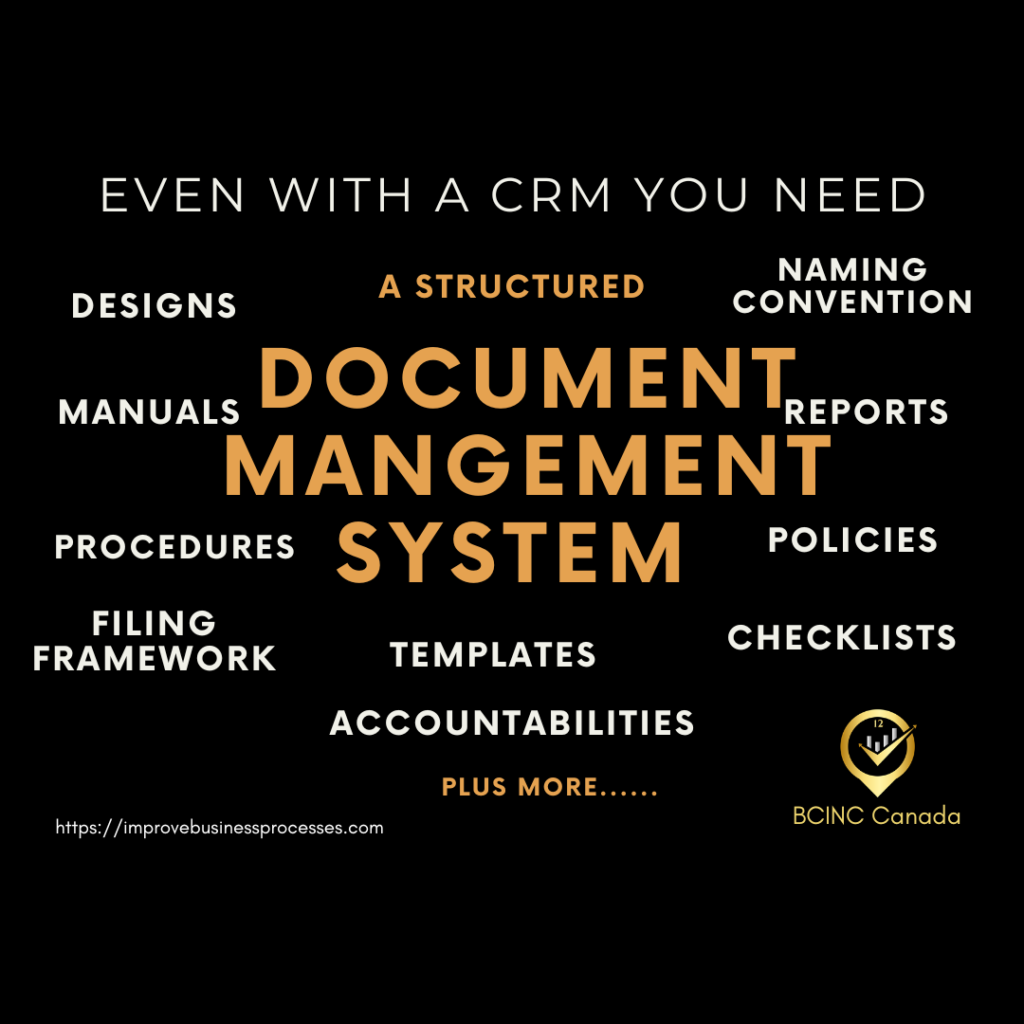
- clear naming conventions
- defined document types
- version control procedures
- structured filing architecture
- defined ownership and review cycles
These features ensure documentation supports operations instead of becoming administrative clutter.
A framework also prevents uncontrolled document creation — one of the most common hidden causes of process inconsistency.
Steps to Create a Document Management Framework
Implementing the steps to create a document management framework does not require complex software — it requires clarity and discipline.
1. Define naming conventions
Naming should allow quick retrieval without guessing. Identifier codes, revision numbers, and functional grouping improve traceability and reduce confusion.
2. Establish document categories
Clear classification prevents overlap and ensures employees understand which documents carry authority versus guidance.
3. Create document control procedures
Define who approves, edits, reviews, and archives documents. Without ownership, documents become unreliable quickly.
4. Build a logical filing structure
A simple hierarchical folder system improves retrieval speed and supports knowledge transfer across teams.
These steps create the foundation for scalable knowledge management and smoother internal audits.
Document Types Within a Document Management Framework
Different documents serve different purposes, and clarity prevents misuse.
Governance and compliance documents
Standards, regulations, and contractual requirements guide business obligations. Maintaining current versions protects the organization from compliance gaps and inconsistent interpretation.
Policies
Policies define intent and expectations across the organization. They establish boundaries and guide consistent decision-making.
Procedures
Procedures translate policy into action. They define responsibilities, workflow steps, and expected outcomes to ensure repeatable execution.
Understanding why strong operational procedures matter helps businesses move beyond documentation for compliance and instead use it as a foundation for consistent service delivery and continuous improvement.
Guides, manuals, and reports
These provide contextual knowledge and operational insight. While not always mandatory, they improve training and reduce reliance on tribal knowledge.
Work instructions and checklists
These standardize execution at the operational level. They are especially valuable in trades and service environments where consistency directly affects customer experience.
Templates
Templates protect brand integrity, legal wording, and consistency.
Centralized template access prevents unauthorized modifications and outdated communications.
Supporting Business-Grade Tools
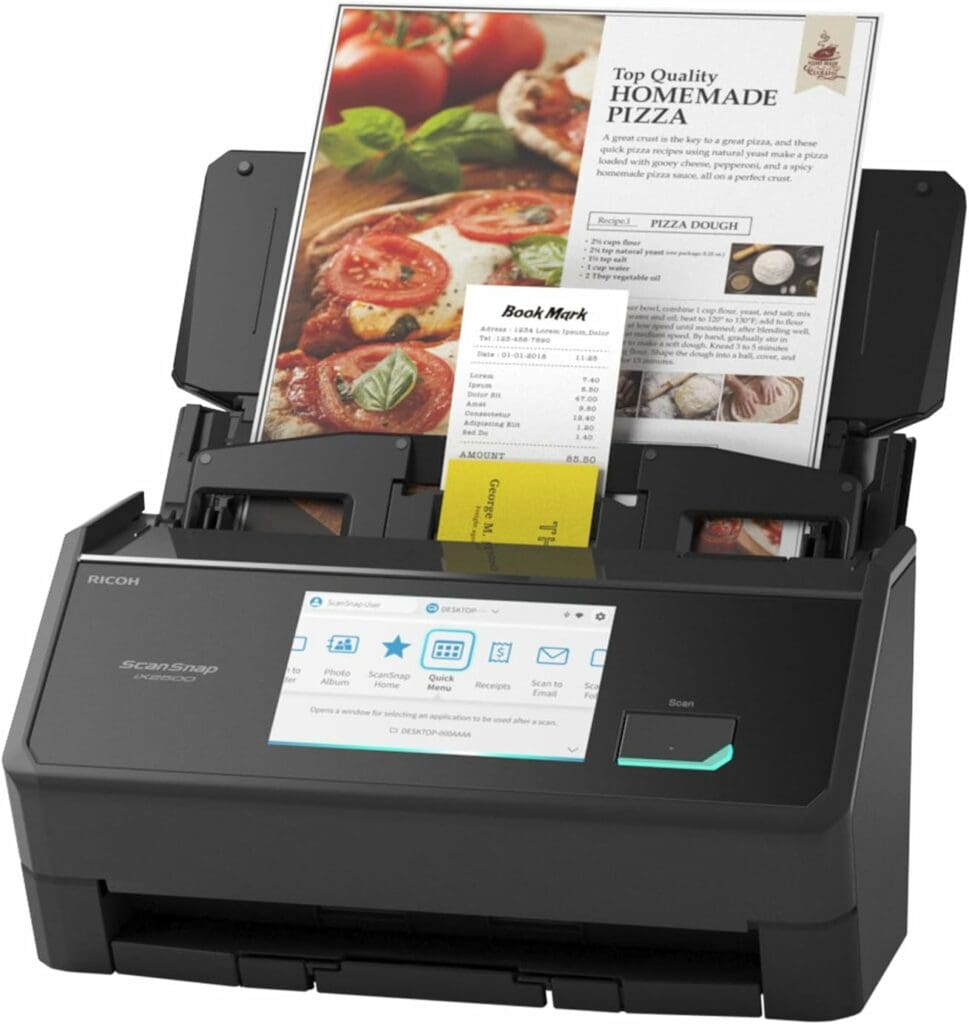
- ScanSnap iX2500 Wireless or USB High-Speed Cloud Enabled Scanner— for high-speed document digitization (Document, Business Card, Photo, Receipt, ID Card, Insurance Card).
- Epson Workforce ES-500W II Wireless Color Duplex Desktop Document Scanner for PCand Mac with Auto Feeder (ADF), Scan from Smartphone or Tablet — efficient workflow capture
- Samsung T7 Shield Portable SSD — secure document backup and portability
- Synology 4-Bay DiskStation DS423 (Diskless) Black — centralized secure private cloud for business. Provides document storage for small teams.
Expert Tips for Document Management Frameworks
These practical expert tips help prevent common failures:

- keep documentation lean and usable
- assign clear document ownership
- review critical documents periodically
- avoid storing documents across multiple uncontrolled locations
- ensure employees understand where to find and use documents
A well-designed filing structure does more than organize documents — it plays a critical role in how to restore order to your business operations, especially when teams struggle to find accurate information quickly.
A framework should support the business and not create administrative resistance!
Conclusion
A document management framework is the invisible structure that supports operational consistency, compliance, and scalability.
Without it, businesses rely on memory, scattered files, and inconsistent execution — all contributors to hidden operational risk.
Strong documentation supports planning clarity, accountability, and decision-making, which is why understanding the essentials of a business plan for structured growth complements any document management initiative.
If your documentation feels scattered, outdated, or difficult to trust, it may be time to step back and build a structured framework that supports your business long term.
CTA:
If you want a practical management framework that improves clarity without overwhelming your team, BCINC can help you assess, design, and implement a system that actually gets used.
Related Articles
- Small Business Document Management System – How to Begin Set Up
- Document Management and Digitization
- Benefits of Streamlining Processes
FAQ
What is a document management framework?
This is a structured system for creating, storing, controlling, and reviewing business documents to ensure accuracy, compliance, accessibility, and consistent use across the organization.
How does a document framework improve efficiency?
It improves efficiency by reducing time spent searching for documents, preventing version confusion, standardizing workflows, and ensuring employees always use accurate and approved information.
Why is document control important for small businesses?
Document control prevents errors, supports compliance, protects critical information, and ensures consistent service delivery by maintaining accurate versions and clearly defining document ownership.
What are the key components of a document management framework?
Key components include naming conventions, defined document types, version control procedures, structured filing systems, ownership responsibilities, and regular document review cycles.
How often should business documents be reviewed?
Critical documents should be reviewed at least annually or whenever operational, regulatory, or process changes occur to ensure accuracy, compliance, and continued relevance.
References
- Governance Document Management Framework https://www.cdu.edu.au/sites/default/files/governance/docs/governancedocumentmanagementframework.pdf
- Troung, H (2021) Complete Guide to Managing Business Documents for Small Businesses https://anyconnector.com/en/business-documents.html


