

Learn the fundamentals of digital transformation for small businesses with 6 focus areas that improve efficiency, reduce friction, and support sustainable growth
Digital transformation often sounds intimidating — expensive systems, complex integrations, and enterprise-level change initiatives.
But for small businesses, digital transformation rarely begins with technology. It begins with frustration.
Missed follow-ups. Manual spreadsheets. Repeated questions. Bottlenecks that slow growth.
I once worked with a small service company still relying on paper job sheets. They weren’t resisting change — they simply didn’t know where to begin. Their transformation didn’t start with software. It started with clarity.
Understanding the fundamentals of digital transformation for small businesses is less about adopting tools and more about improving how work flows, decisions are made, and information is shared.
Digital transformation, when approached correctly, becomes a gradual operational evolution rather than a disruptive overhaul of your business.
What Is Digital Transformation in Small Businesses?
Many small businesses struggle to determine whether they need process improvement or optimization before introducing digital solutions, and this decision significantly affects transformation success. ADD Link to post
Digital transformation in SMBs is the intentional use of technology to improve operations, customer experience, and decision-making.
It is not simply buying software. It involves aligning business systems, workflows, and data visibility so that technology supports efficiency rather than adding complexity.
Small businesses benefit most when transformation improves operational efficiency and reduces reliance on memory-based processes.
The real shift is cultural: moving from reactive problem-solving toward structured, data-informed decision-making.
Before beginning any transformation initiative, small businesses benefit from conducting a simple readiness assessment.
This includes reviewing existing workflows, identifying process inconsistencies, and evaluating leadership alignment around digital priorities.
Transformation without readiness often creates tool overload rather than clarity. A business that digitizes unstable processes simply accelerates inefficiency.
Taking time to stabilize operations first strengthens operational maturity and ensures that technology amplifies performance rather than masking structural weaknesses.
Current Digital Transformation Trends for Small Businesses
Digital transformation trends for small businesses increasingly focus more on accessibility rather than sophistication.
Key trends include:
- cloud-based collaboration tools
- automated customer communication
- integrated financial tracking
- workflow automation
These trends reflect a shift toward simplicity and visibility.
What matters is not adopting every trend, but selecting those that strengthen information flow and improve decision-making confidence across daily operations.
What are The Fundamentals of Digital Transformation for Small Businesses?
The fundamentals of digital transformation are surprisingly consistent for small businesses. Digital adoption frequently highlight accountability and follow-up.
Successful initiatives typically involve:
- clear process documentation
- defined ownership of digital tools
- realistic adoption pacing
- training and reinforcement
Transformation that ignores people and processes rarely succeeds. Similarly, fundamentals that are not properly defined and understood ultimately lead to poor implementation.
When fundamentals are respected, digital adoption strengthens operational stability and enhances organizational adaptability without overwhelming teams.
Exploring Digital Transformation Options for Small Businesses
Small businesses often feel overwhelmed by choices. Cloud tools, automation platforms, CRM systems — the options seem endless.
Digital transformation often exposes underlying inefficiencies, which is why revisiting how to improve business processes is a critical early step before adopting new tools.
Exploring digital transformation options for small businesses begins with identifying friction points rather than browsing software marketplaces.
A retail client once invested in advanced analytics tools without fixing inventory inconsistencies. The result? Better dashboards showing inaccurate data.
Transformation works best when technology addresses clearly defined operational needs, reinforcing workflow clarity and improving process consistency rather than introducing new layers of complexity.
How Do I Create a Digital Transformation Roadmap for My SMB?
Insights gained during digital transformation should eventually be reflected when updating how to write the operations section of a business plan so documentation mirrors real workflows.
Many transformation initiatives fail because businesses adopt tools without a roadmap.
A practical roadmap answers three questions:
- What problems are we solving?
- What processes must change first?
- How will success be measured?
A consulting client began with a simple roadmap: centralize communication, digitize scheduling, and automate invoicing. Within six months, administrative time dropped significantly — not because of advanced technology, but because priorities were clear.
A roadmap reinforces strategic alignment and ensures transformation supports measurable outcomes.
How to Implement Digital Transformation in Small Business
This is where rubber hits the road. You want to implement this right – the first time! For details refer to our guide – How Do I Implement Digital Transformation Without Errors.
Helpful Tools That Support Practical Digital Transformation
Below are four highly rated Amazon.ca products that support structured digital adoption and visibility.

ROCKETBOOK Smart Reusable Notebook Wireless
Capture findings and action steps fast

VIZ-PRO Dry Erase Magnetic Board
Map workflows and bottlenecks visually

EPSON EcoTank ET-4950 Wireless All-in-One Color Supertank Printer
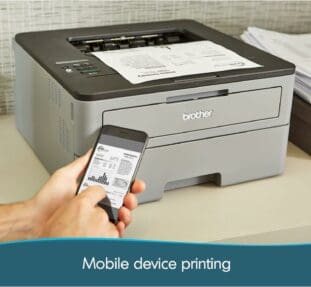
BROTHER Compact Monochrome Laser Printer HL L2350DW
Digital Transformation Success Stories for Small Businesses
Digital transformation success stories for small businesses often share a common theme — modest changes producing disproportionate impact.
Implementing digital tools without a clear roadmap is one of the common business plan mistakes that lead to fragmented systems and disappointing results.
A small accounting firm transitioned from email-heavy client communication to a shared client portal. The result wasn’t just efficiency — it reduced missed information and improved client confidence.
Another service business introduced automated reminders, significantly reducing appointment gaps without increasing marketing spend.
These examples illustrate that transformation improves outcomes when it enhances customer experience consistency and strengthens process visibility.
Next Steps After Implementing Digital Transformation in Small Business
Transformation does not end at implementation.
After implementing new digital systems, leaders must intentionally evaluate process optimization outcomes to confirm that efficiency gains remain sustainable.
The next steps after implementing digital transformation in small business involve evaluation, refinement, and reinforcement.
Metrics to monitor include:
- adoption rates
- workflow stability
- employee feedback
- customer response
Another often overlooked step is risk monitoring. Digital transformation can introduce cybersecurity exposure, data dependency risks, and process fragility if systems become overly centralized.
It is necessary to periodically assess backup procedures, staff competency, and contingency planning. Sustainable transformation requires resilience planning alongside efficiency gains.
Businesses that treat digital systems as critical infrastructure — rather than convenience tools — are far more likely to sustain performance improvements over time.
This is because without evaluation, new systems risk becoming digital versions of old inefficiencies.
Continuous refinement supports continuous improvement and ensures digital investments translate into long-term operational maturity.
Practical Action
If your organization is considering digital transformation but lacks clarity on where to begin, BCINC provides structured operational assessments and roadmap development designed specifically for small businesses navigating modernization.
Conclusion
Digital transformation is not a technology project — it is an operational evolution.
When approached thoughtfully, it reduces friction, improves visibility, and strengthens decision-making across the organization.
Small, deliberate changes often produce the most sustainable transformation.
Understanding how to implement digital transformation in small business allows leaders to modernize confidently without overwhelming their teams or resources.
FAQs
What is digital transformation for small businesses?
It is the strategic adoption of technology to improve workflows, decision-making, and customer experience.
How do I start digital transformation in a small business?
Begin by identifying operational friction, documenting processes, and implementing targeted digital tools that address specific challenges.
What are the biggest barriers to SMB digital transformation?
Common barriers include unclear priorities, tool overload, resistance to change, and lack of structured planning.
How long does digital transformation take for a small business?
Transformation is ongoing, but meaningful improvements often appear within the first 3–6 months when changes are focused and well-supported.
Authority References
- Government of Canada — Canada Digital Adoption Program (CDAP) https://cdap-grant.ca/
- Deloitte Insights — SMB digital adoption and modernization trends
- CFIB – Digital Transformation: How small businesses in Canada are leveraging AI and technology for growth and productivity https://www.cfib-fcei.ca/en/research-economic-analysis/digital-transformation-how-small-businesses-in-canada-are-leveraging-ai-and-technology-for-growth-and-productivity


