

This practical guide to writing mission and vision statements for small business plans provides 7 proven steps to create statements that actually guide decisions.
If you’ve ever repeatedly scratched your head trying to write your mission and vision statements, you’re not alone.
I’ve worked with plenty of small business owners who could explain their business perfectly in conversation—but the moment they had to write it down…. Let’s just say that everything suddenly felt fuzzy.
That’s because mission and vision statements sound simple… until you actually try to write them.
This guide to writing your mission and vision statements is designed to walk you through the process step by step, without the corporate fluff or vague buzzwords.
Whether you’re working on your complete small business plan or revisiting an older one that no longer fits, these seven steps will help you create statements that feel real, grounded, and useful—not just something you write once and forget.
Along the way, I’ll share practical tips that come straight from experience, plus a few tools that can make the process less painful and a lot more productive.
Why a Guide to Writing Mission and Vision Statements in a Business Plan Saves Time
Before jumping into the steps, let’s clear something up.
Your mission and vision statements aren’t just “nice-to-haves.” They serve very different—but equally important—roles in your business plan.
- Your mission statement explains what you do, who you serve, and how you do it right now
- Your vision statement describes where you’re going and what success looks like in the future
Understanding differences between mission and vision statement concepts upfront prevents a lot of confusion later—and avoids the common mistake of blending them into one vague paragraph in the company overview section.
Step 1: What is the Difference Between Mission and Vision Statements?
This step deserves its own section because confusion here causes problems everywhere else.
The difference between mission and vision statement ideas can be summed up simply:
- Mission = present
- Vision = future
Mission statements drive day-to-day decisions. Vision statements guide long-term strategy and enhances marketing strategy planning.
Practical Tip
If you can swap your mission and vision statements without noticing a difference, they’re not doing their jobs.
Clarifying this distinction early makes the rest of the writing process much smoother.
Step 2: How to Write a Mission Statement for a Small Business – Clarify Purpose of Mission Statement
The first step in this guide to writing mission and vision statements is getting crystal clear on what your mission statement is supposed to do.
A strong mission statement answers three basic questions:
- What does your business do?
- Who does it serve?
- How does it deliver value?
This is where many owners overcomplicate things. I’ve seen mission statements that sound impressive but don’t actually explain the business at all. If someone outside your industry can’t understand it, it probably needs simplifying.
Practical Tip
If you can’t explain your mission in one or two sentences without using jargon, it’s not ready yet. Say it out loud first. Writing comes later.
This step ties directly into how to create a mission statement that’s clear, grounded, and useful.
Step 3: How Can I Write a Vision Statement That Inspires?
Your vision statement is future-focused, but it still needs to be believable.
A good vision statement answers:
- Where do you want the business to be in 5–10 years?
- What kind of impact do you want to have?
- What does “success” actually look like for you?
Many business plans fall into the trap of writing grand, vague visions that sound good but don’t inspire action. That’s one of the most common mistakes covered in common mistakes in writing vision statements.
Practical Tip
If your vision sounds impressive but doesn’t help you make decisions, it’s too abstract. A strong vision should guide choices, not just decorate a page.
This step also answers the question – how can I write a vision statement that inspires?—by keeping your content ambitious and realistic.
Step 4: The Role of Mission Statements in Strategic Planning – Align With Your Business Goals
One of the biggest mistakes small business owners make is writing mission and vision statements that sound nice—but don’t connect to real goals.
This is where alignment matters.
Your mission and vision should:
- Support your growth goals
- Reflect your values
- Align with how you plan to compete
- Reinforce your long-term direction
This step is closely tied to the role of mission statements in strategic planning. If your statements don’t influence planning decisions such as financial projections, they’re just words on paper.
Practical Tip
After writing each statement, ask: Would this still make sense if I doubled my revenue? Hired more staff? Expanded locations? If not, refine it.
Step 5: Practical Tips for Crafting Impactful Mission Statements – Keep It Human
If there’s one lesson I’ve learned the hard way, it’s this: corporate-sounding mission statements rarely survive contact with real life.
Your business plan doesn’t need buzzwords. It needs clarity.
Avoid phrases that sound impressive but say nothing. Focus instead on:

- Plain language
- Real values
- Actual customers
- Honest intentions
This step reinforces practical tips for crafting impactful mission statements, especially for small businesses and startups.
Helpful Resource
Many owners find it easier to brainstorm on paper before typing anything up.
Recommended Product:
📘LEGEND Deluxe Weekly Monthly Life Planner – This undated weekly planner combines effective planning tools and goal-setting frameworks helpful for mapping values, goals, and priorities.
Step 6: What is the Impact of Mission Statements on Employee Engagement? – Test Them
Once you’ve drafted your mission and vision, it’s time to test them against real scenarios.
Ask yourself:
- Would this help me decide which clients to take on?
- Would it guide hiring decisions?
- Would it help resolve a tough trade-off?
- Would it still make sense in five years?
This is where theory meets reality—and where weak statements usually fall apart.
Practical Tip
Share your statements with someone who knows your business but isn’t emotionally attached to it. Their reaction will tell you a lot.
This step also connects with the impact of mission statements on employee engagement, especially as your team grows.

Step 7: Document and Revisit Them Regularly
The final step in this guide is documentation and review.
Your mission and vision should appear:
- In your business plan
- In internal documents
- In onboarding materials
- In strategic planning discussions
They aren’t static. As your business evolves, they should evolve too. This is one step where several business owners fall short.
Helpful Tools for Documentation
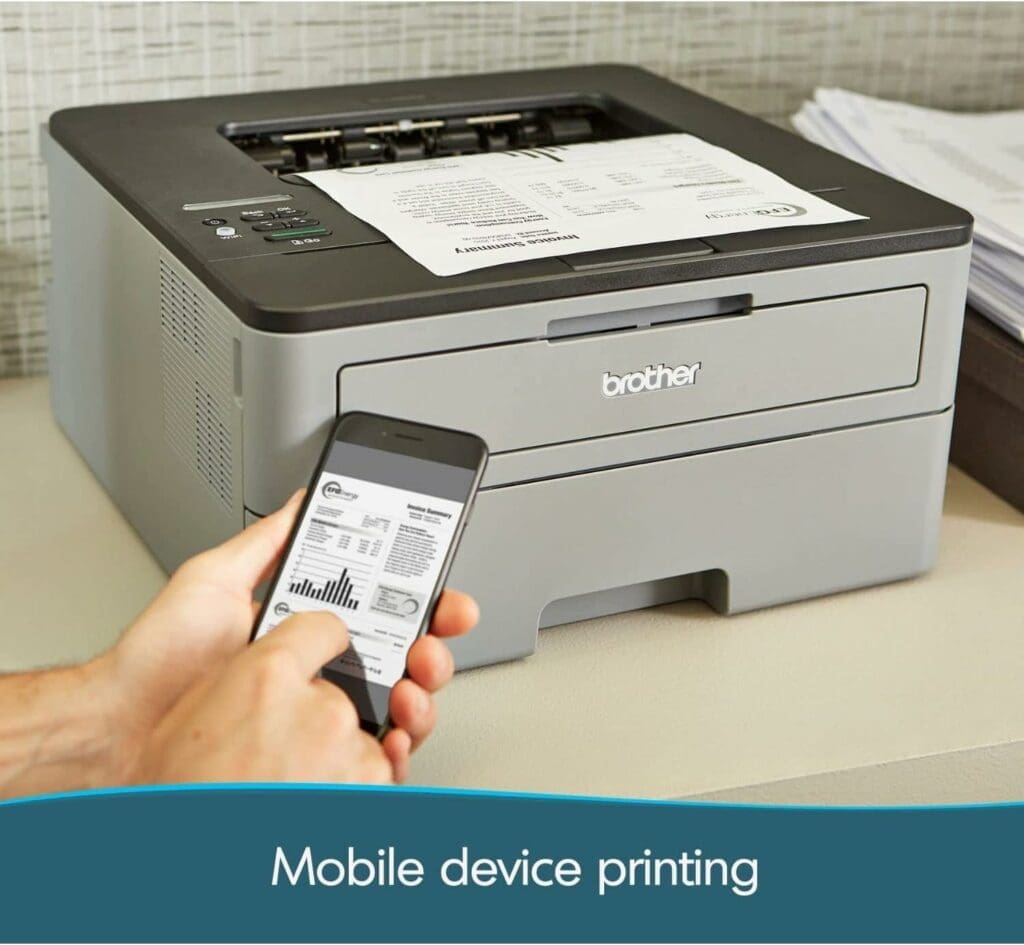
Keeping your planning materials organized makes updates easier.
Helpful Products:
- 📕 ROCKETBOOK Smart Reusable Notebook – No more wasting paper – this notebook has 7 different page styles for planning, listing, goal setting, note-taking, sketching, and sharing big ideasgreat for iterative planning and revisions
- 🖨️ BROTHER HL-L2350DW Monochrome Laser Printer – useful for printing planning drafts and finalized business plans
- 💾 SEAGATE Portable 2TB External Hard Drive – for securely storing business plan versions and planning documents
Avoid These Common Mistakes When Writing Mission and Vision Statements

Before wrapping up, here’s a quick reminder of mistakes many small businesses make:
- Writing statements that are too vague
- Mixing mission and vision together
- Ignoring long-term goals
- Copying examples that don’t fit the business
- Never revisiting the statements after writing them
Avoiding these mistakes keeps your mission and vision practical and relevant.
Conclusion: Make Your Mission and Vision Actually Work
Writing mission and vision statements doesn’t have to be painful—or pointless.
When done right, they become anchors for decision-making, planning, and growth. This isn’t about perfection; it’s about clarity, alignment, and usefulness.
Take your time with the process. Test what you write. Revisit it when things change. And don’t be afraid to simplify—clarity beats cute every time.
Next Step CTA
If you want help structuring the rest of your business plan, or need tools to document and organize your planning work, explore the resources above and start turning ideas into action, OR get speedy guidance:
FAQs
What is the difference between a mission and vision statement?
A mission statement explains what a business does today, while a vision statement describes where the business wants to be in the future.
What is the purpose of a mission statement in a business plan?
A mission statement explains what your business does, who it serves, and how it delivers value. It helps guide daily decisions and shows clarity to lenders and partners.
How long should mission and vision statements be?
Most effective mission and vision statements are one to two sentences long—clear, focused, and easy to understand.
Why are mission statements important for strategic planning?
Mission statements help guide priorities, align teams, and support long-term planning by keeping decisions anchored to the business’s core purpose.
Where do mission and vision statements go in a business plan?
They usually appear near the beginning of the business plan, often after the company overview or executive summary.
How often should mission and vision statements be updated?
They should be reviewed whenever your business strategy, goals, or direction changes significantly.


